Meteors, Moons and Life Elsewhere? Starry night wows young astronomers
Tuesday 3rd March 2026
I thought that there may be aliens asking the same questions about Earth!
From meteors to Jupiter and its moons, young stargazers witnessed the wonders of the night sky and investigated ‘life elsewhere’ at the Science Oxford Centre in February.
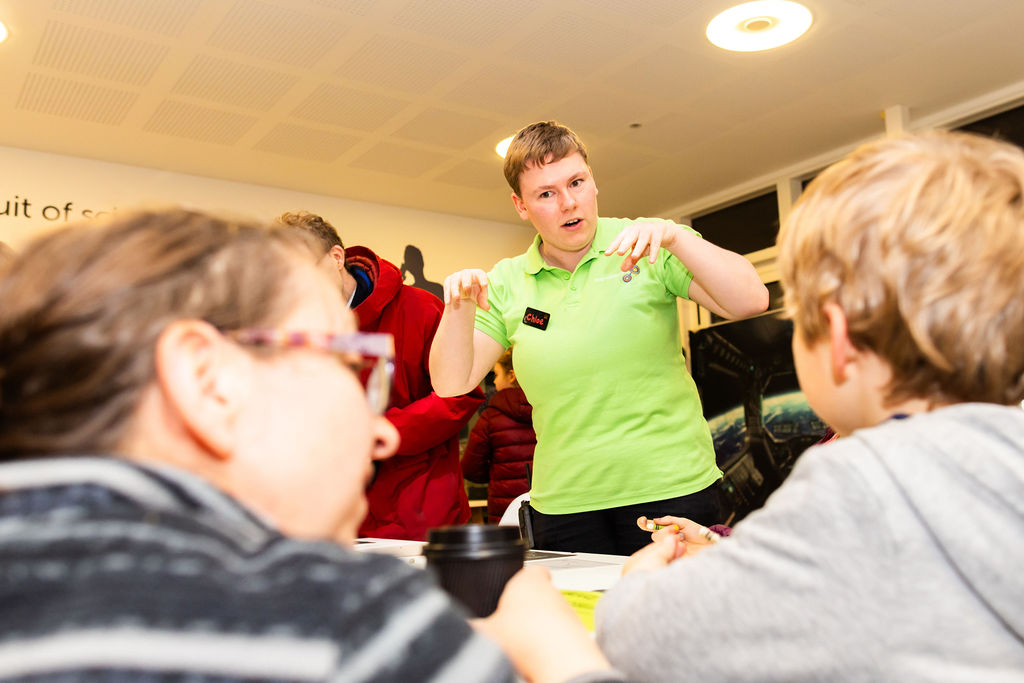
Families enjoyed our planetarium show, discovered how scientists search for life in our solar system and beyond and pondered what constitutes ‘life’. We visited moons, exoplanets and the Milky Way and learned about some strange worlds already discovered by the Kepler Space telescope.
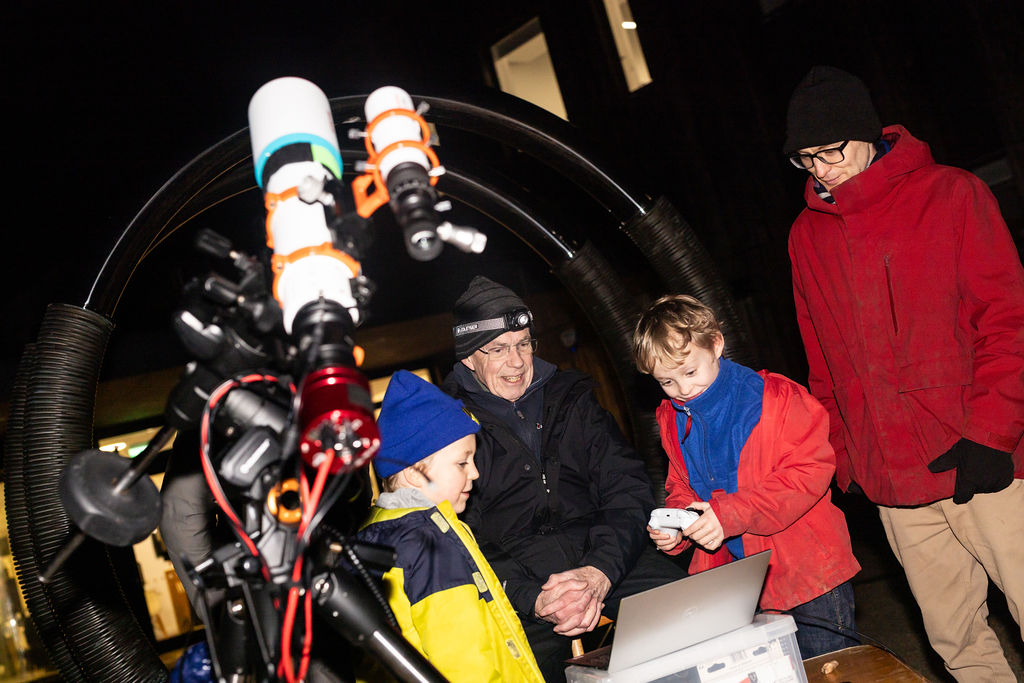
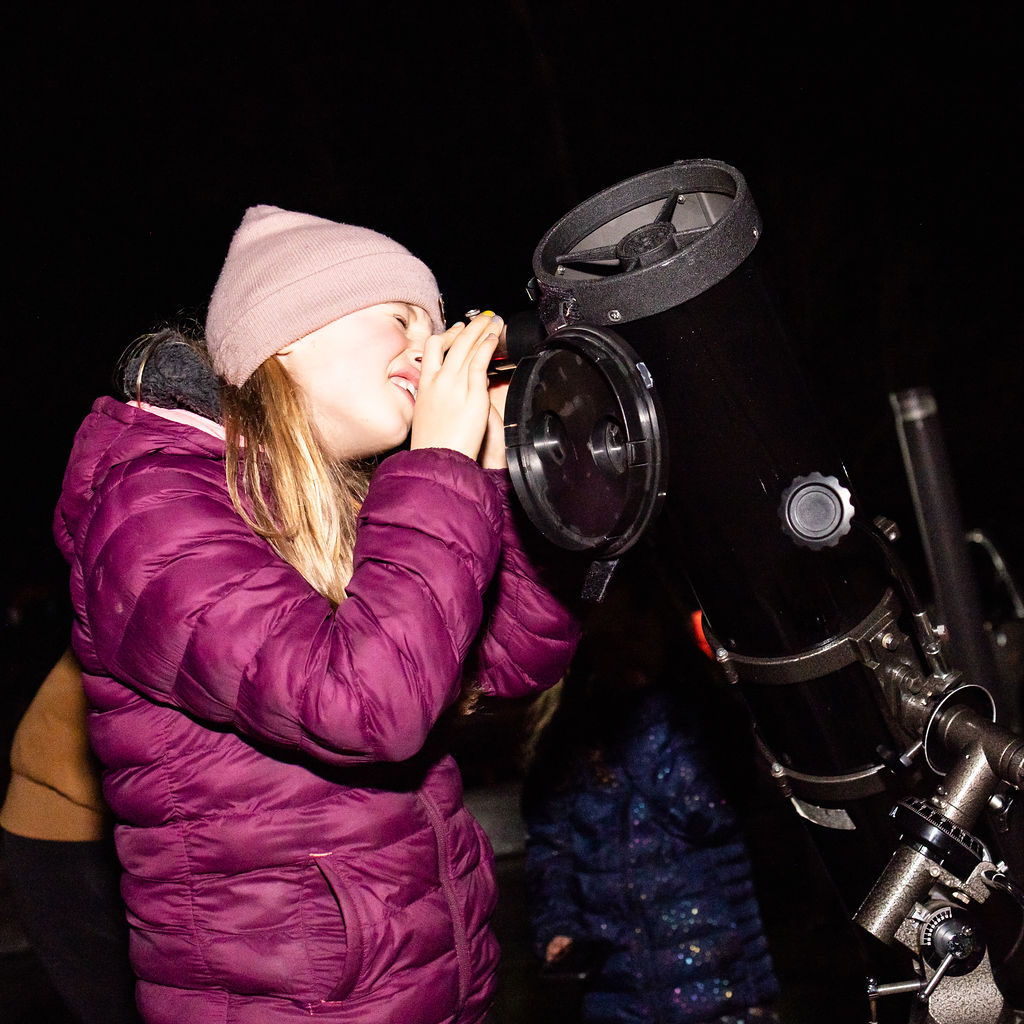
Our resident Space Science Specialist, Kat Kelly, said “The evening was brilliant. The rain stopped, the clouds cleared, and we were treated to views of the Moon and Jupiter and four of its moons through the telescope, and even a meteor streaking across the sky at the end of the night!”
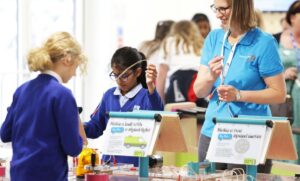
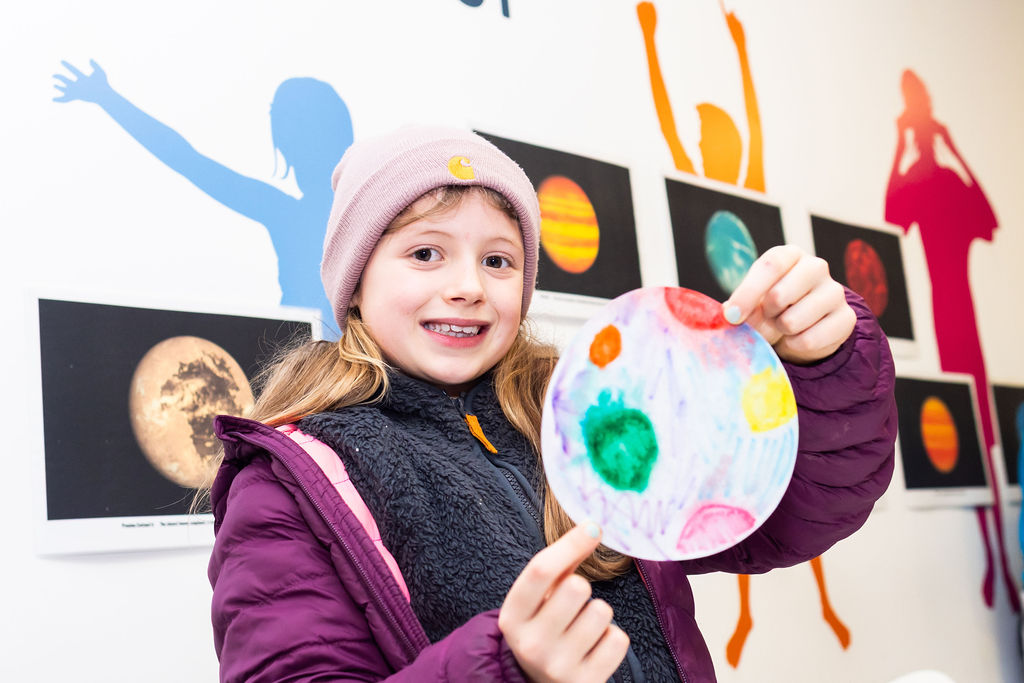
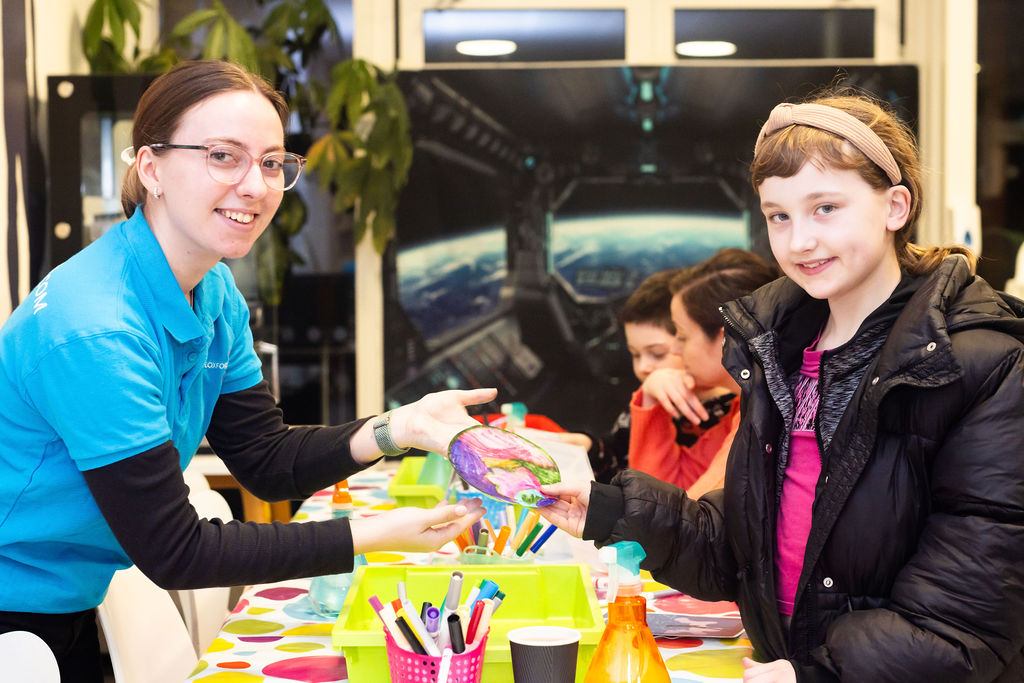
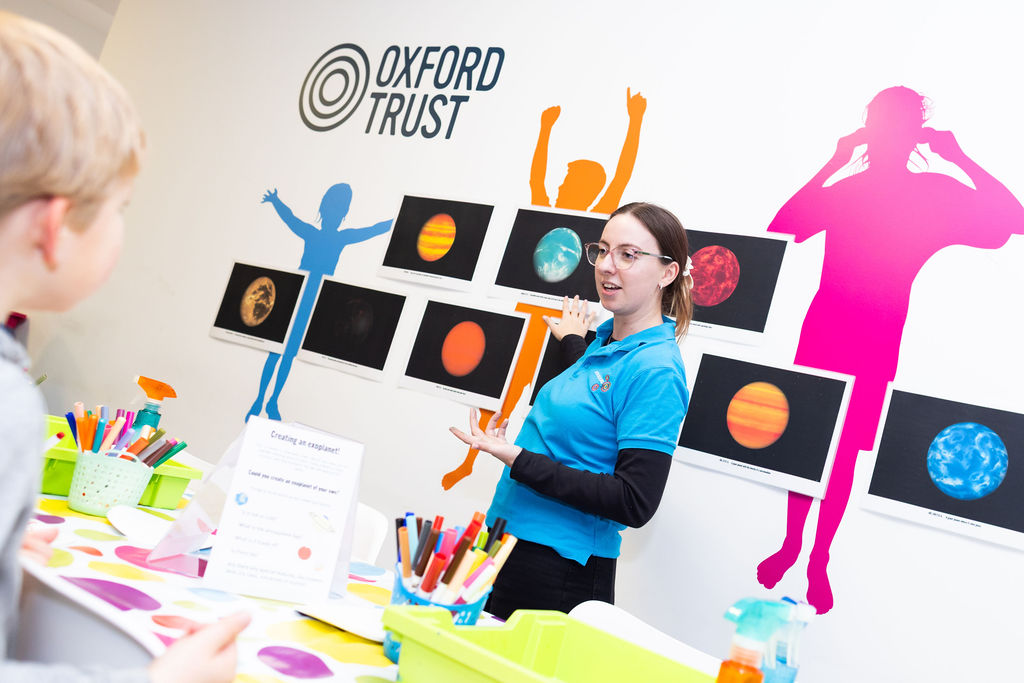
Children made their own exoplanets inspired by existing, known planets. With prompts on temperature, composition and more, they designed their own patterns and experimented with the science of chromatography.
Oxford’s Space Store wowed with VR headsets and Abingdon and Marcham Astronomy societies guided young astronomers across the February night sky.
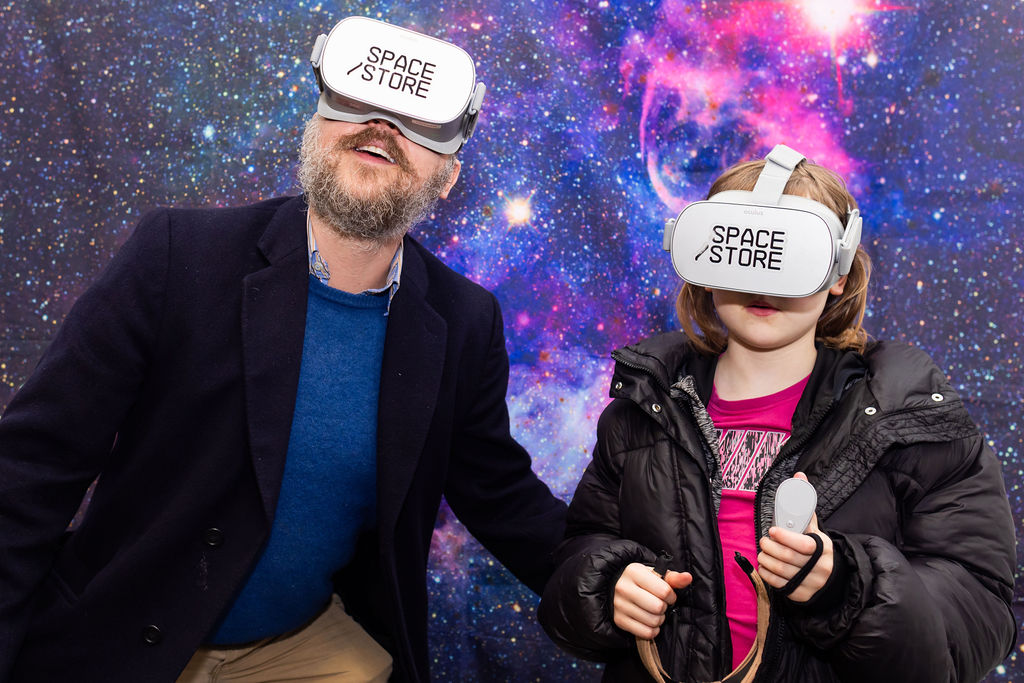
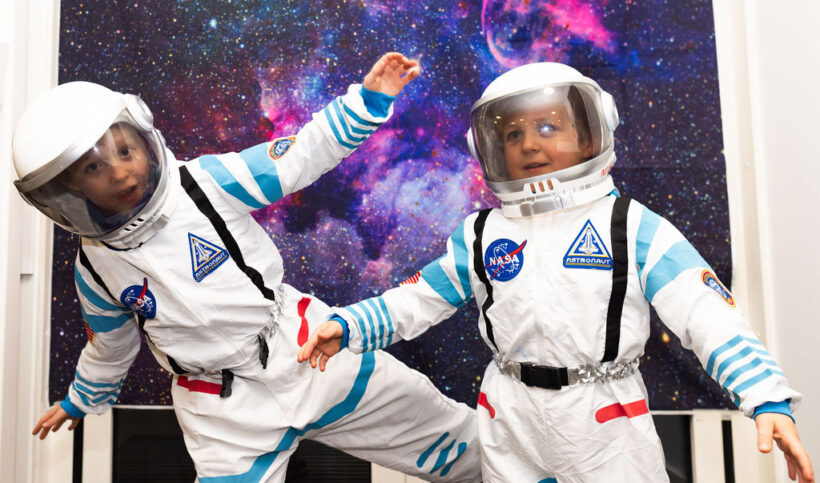
Local families from the Headington, Barton and East Oxford area were invited to enjoy the illuminating evening thanks to funding from The Oxford Trust. Sian Stratton, Engagement Manager at Science Oxford, said: “This was our fifth Starry Night and with clear skies, it was a great opportunity for families and young people to see Jupiter and its moons in real time, with a team of astronomers and experts on hand. Thanks to Space Store for their brilliant space suits and VR headsets to try, which brought a lot of fun to the evening.”
How big is the galaxy in space?
Visitors said highlights were seeing our planet in the planetarium show, looking at the surface of the Moon and seeing Jupiter and its moons through the telescopes. Many enjoyed learning about exoplanets, discovering how many moons – and icy moons – are around the planets, and just how big our galaxy is in space! One family felt more informed about the possibility of life elsewhere, commenting, “I thought that there may be aliens asking the same questions about Earth!” Our space explorers said they would look up at the stars more often.
Get involved! NASA’s Artemis II mission will carry astronauts around the Moon and marks the first crewed mission of the Artemis programme since the Apollo era. As the rocket prepares for launch from the Kennedy Space Centre in March, you can sign up for your virtual boarding pass to send your name around the Moon! Follow the mission with activities, news and online resources.
Check out our spring family events here.